YM210D Paging‑Feed Flat‑Surface Labeling Machine for Flexible
Pouches, Sachets & Paper‑Based Flat Goods
Many mid‑to‑large packaging plants struggle with bottlenecks on
flat‑goods labeling workflows. A large number of competing paging
labeling units on the market suffer from recurring pain points:
frequent double‑feeding on static‑prone thin mylar bags, complex
mechanical re‑calibration when switching SKUs, limited
expandability, poor long‑shift stability and lack of actionable
fault feedback for line operators.
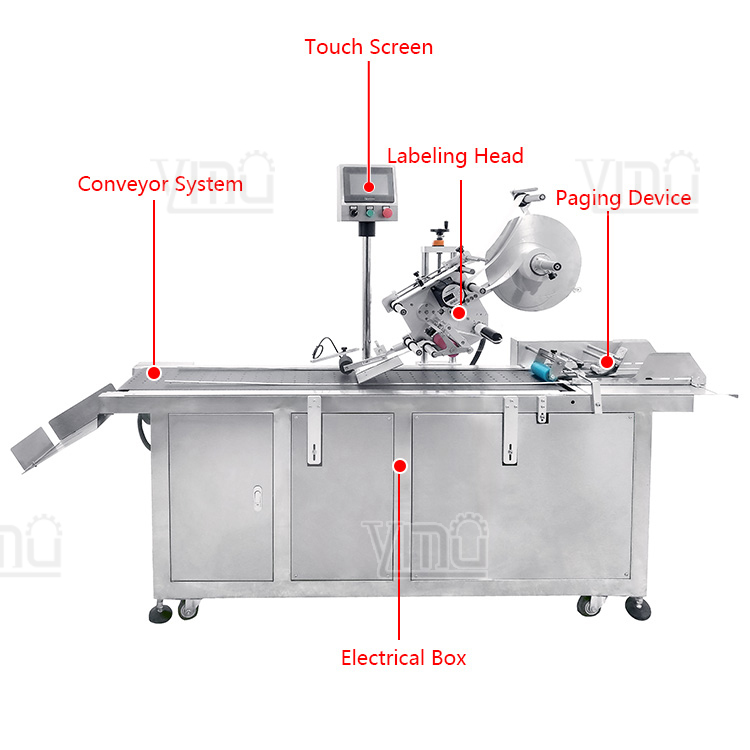
The YM210D flat surface labeling machine is purpose‑built to
resolve these real‑world manufacturing frustrations. Unlike generic
flat labelers that require manual piece‑by‑piece feeding, this
integrated system merges material separation, conveying,
sensor‑triggered label dispensing and post‑label roller pressing
within one unified machine chassis. It is engineered to operate
continuously across multi‑shift production cycles, either operating
as a standalone workstation or embedded as one station within a
broader end‑to‑end packaging workflow.
Target buyers include packaging contract manufacturers, food
processing factories, cosmetic sachet producers, electronics
component packers and print‑house businesses that process large
batches of flat, stackable articles. Rather than merely delivering
sticker application, YM210D flat surface labeling machine helps
factories reduce rework waste, stabilise output throughput and
lower long‑term labour dependency.
Common Production Bottlenecks YM210D flat surface labeling machine
Resolves For Packaging Facilities
This section addresses pain‑points that production managers and
line supervisors face day‑to‑day, comparing against manual
labelling and competing mid‑market paging equipment:
- Static‑caused mis‑feeding of thin flexible materials:Traditional
friction‑only paging mechanisms frequently pull two or more stacked
mylar / PE pouches together, creating unlabelled rejects that must
be sorted out manually. YM210D flat surface labeling machine comes
with adjustable anti‑static paging assembly to mitigate
static‑driven sheet adhesion.
- Excessive downtime for product changeover:Numerous competitor
machines demand full mechanical readjustment for every new pouch or
card dimension, leading to 20‑30 minutes of production halt for
each SKU swap.
- High reject rates caused by uneven label
application:Manually‑applied labels create air‑bubbles, creases and
position drift, hurting brand presentation and triggering QC
rejections.
- Blind operation without early‑warning alerts:Many budget paging
labelers keep running even when labels run out or materials stop
feeding, generating batches of non‑compliant unlabelled goods
discovered only during final QC inspection.
- Limited expandability for future production growth:Entry‑level
competing label applicators cannot add coding or marking modules
later; users are forced to buy entirely new machines once
traceability printing becomes required.
- Operator skill barrier:Complicated multi‑step setup forces
factories to rely on experienced senior staff to run labeling
stations.
YM210D flat surface labeling machine mitigates each of these
operational risks. Adjustable paging force handles static‑sensitive
flexible substrates; touch‑screen recipe memory cuts SKU‑switch
downtime; closed‑loop sensor logic implements “no product → no
label” protection; audible‑visual fault alarms notify operators
immediately of feed or label stock issues; and the machine’s
modular architecture supports post‑delivery addition of date
coders, thermal printers and collecting stations without major
hardware rebuilds.
Step‑by‑Step Operational Workflow — How YM210D Flat Surface
Labeling Machine System Runs
The full operating sequence runs automatically after one‑time
parameter setup by your technician. It differs structurally from
older generation labelers by separating paging feeding and
label‑actuation logic into independent controlled modules:
- Bulk material loading:Operators stack pouches, sachets or
paper‑cards into the large‑capacity input hopper. Hopper holds
100‑300 pieces for one loading cycle, removing the need for
frequent top‑ups.
- Controlled paging separation:Adjustable friction‑assisted paging
module separates single items. For static‑prone ultra‑thin films,
operators can tweak separation tension via HMI without mechanical
disassembly. Individual pieces drop onto the anti‑slip conveyor
surface.
- Presence detection & timing trigger:High‑resolution photoelectric
sensor detects incoming product and transmits timing signal to the
PLC unit. The system calculates exact label‑peel timing based on
pre‑saved product‑recipe data.
- Label dispensing & roller‑assisted pressing:Self‑adhesive stickers
are peeled from liner backing. A compliant silicone pressing roller
rolls across the label surface to expel trapped air, delivering
bubble‑free adhesion onto flat article surface. Liner waste is
wound onto the rewinding spool.
- Finished‑product output:Completed labelled items travel towards the
output end. Optional collecting table gathers finished goods.
Modular extension path:Install inkjet / thermal coding unit
upstream of label‑pressing station, to print batch numbers, expiry
dates or QR traceability data directly onto labels in real‑time
during production.
Distinctive Features & Competitive Advantages
Focus on benefit‑driven copy, not just hardware specs;highlight
differentiators against mainstream market alternatives
- ✅ Recipe storage for rapid batch switching:Save multiple product parameter profiles within HMI memory. When
switching between hang‑tags, coffee pouches and cosmetic sachets,
operators simply call up stored presets. Change‑over time often
reduces down to 5‑8 minutes, minimising production idle time.
- ✅ Anti‑static‑optimised paging assembly:Optimised for mylar, PE, CPP thin‑film bags that build static
electricity during high‑speed stacking‑separation. Reduces
double‑feed incidents which are widespread pain‑point for many
cheaper competing paging label applicators.
- ✅ Servo‑driven label head with repeatable ±1 mm accuracy:Servo motor control delivers consistent label placement across long
multi‑shift runs. Position drift rarely occurs even at near‑maximum
operating speed.
- ✅ Modular hardware architecture for future‑proof investment:You can start with basic paging‑to‑label configuration, and later
add date‑coding, output‑collector or guiding‑fixture accessories
without purchasing a brand‑new machine. Protect your capital
investment as your product portfolio expands.
- ✅ Industrial‑grade hardware build for non‑stop shift‑work:304 stainless‑steel main frame + high‑strength aluminium alloy
structural parts. Core electrical components sourced from
well‑established global brands, lowering unexpected breakdown
frequency for overseas end‑users.
- ✅ Intelligent condition‑monitoring alarm system:Audible‑visual alarm for label‑roll depletion, feeding interruption
and mechanical anomaly. “No‑item‑no‑label” logic prevents wasting
sticker labels when material feeding pauses.
- ✅ Flexible deployment modes:Can run as independent stand‑alone station, or physically inline
coupled to upstream filling‑sealing machines and downstream
case‑packing conveyors. Our engineering team reviews your
existing‑line layout and gives adaptation suggestions.
Real‑World Deployment Use‑Cases & Target Industries
YM210D flat surface labeling machine is deployed across multiple
vertical sectors, processing a wide variety of flat stackable
articles:
- Food & beverage packaging sector:Mylar coffee pouches, snack flat
bags, pet‑food sachets, tea packaging envelopes, seasoning small
flat pouches.
- Beauty & personal‑care manufacturing:Cosmetic sample sachets,
skincare trial‑size flat packets, detergent sachet packaging.
- Printing & promotional goods industry:Hang‑tags, scratch‑off cards,
gift cards, greeting cards, kraft paper inserts, instruction
sheets.
- Electronics & component packing:Anti‑static component bags,
accessory packing flat envelopes, hardware part paper‑back cards.
- Logistics & document processing:Shipping flat pouches, document
mailing envelopes, printed mailing‑label carriers.

Workable substrate types: mylar foil pouch, zip‑lock PE bag, PP
film sachet, coated paper card, kraft cardboard, composite‑film
flat sachet.
Full Technical Specification Table|YM210D Flat Surface Labeling
Machine
| Parameter Item | Specification Value |
|---|
| Equipment Model | YM210D flat surface labeling machine |
| Effective Working Speed | 20‑200 pieces / min (subject to product dimension & material
characteristics) |
| Repeat Labeling Precision | ±1 mm |
| Acceptable Product Length | 100‑700 mm (custom‑modification supported) |
| Acceptable Product Width | 100‑500 mm (custom‑modification supported) |
| Compatible Sticker‑Label Length | 20‑300 mm |
| Compatible Sticker‑Label Width | 10‑180 mm |
| Maximum Outer Diameter of Label Roll | 380 mm |
| Label‑Roll Inner Core Diameter | 40 mm /76 mm (interchangeable) |
| Input Hopper Loading Capacity | 100‑300 pieces per fill |
| Power Input | 220V single‑phase, 50 / 60 Hz |
| Rated Power Consumption | 700‑1000 W |
| Overall Machine Dimension | L2500 × W750 × H1750 mm |
| Net Machine Weight | 300 KG |
| Control System | International‑brand PLC + Touch‑screen HMI human‑machine interface |
| Main Structural Material | SUS304 stainless steel + high‑strength aluminium alloy |
| Available Optional Modules | Thermal date coder, inkjet marking printer, finished‑goods
collecting station, custom‑made guiding fixtures |
| Compliance Documents | CE certification, pre‑shipment running test report, mechanical
inspection document |
Custom note:If your pouches / cards fall outside standard dimension
ranges, send real‑sample goods to our factory lab. We conduct free
pre‑order machine trial and send you testing video feedback.
Why Partner With Our Machinery Factory For Your Label‑Automation
Project
We are original packaging‑machinery manufacturer based in Shanghai
China, not intermediate trading reseller. Our value proposition for
international industrial buyers goes beyond just supplying hardware
units:
- In‑house mechanical & electrical R&D capability:We own
machining workshop, assembly workshop and internal test lab. Every
YM210D flat surface labeling machine unit undergoes 48‑hours
continuous aging testing before shipment, filtering potential
stability issues prior to delivery.
- Sample‑testing service before order confirmation:Customers may ship
pouch / card samples; our engineering department runs actual
labeling trials and provides test video for your evaluation, so you
avoid blind procurement risk.
- Modification & non‑standard customisation service:Adjust paging
unit, conveyor layout or labeling‑head installation angle according
to your on‑site production‑line conditions.
- Complete overseas‑oriented documentation package:English‑language
operation manual, maintenance guide, spare‑parts list, step‑by‑step
operation tutorial videos are provided together with shipped
machine.
- Long‑term technical support & spare‑parts supply:Remote video
troubleshooting support. Spare‑parts can be supplied at factory
cost rate even after warranty expiration.
- Export‑oriented safe packaging & predictable lead‑time:Equipment
packed inside fumigated solid wooden export crates for sea freight
transit. Standard YM210D flat surface labeling machine production
lead‑time sits at 15‑20 working‑days after receiving deposit
payment.

Frequently Asked Questions
Q1: How does YM210D flat surface labeling machine handle
static‑charged ultra‑thin mylar bags that tend to stick together?
Will double‑feeding happen frequently?
A: YM210D flat surface labeling machine is equipped with adjustable
anti‑static‑optimised paging assembly. Operators can tune
separation tension from the touch‑screen HMI without disassembling
mechanical parts. While zero double‑feed cannot be guaranteed for
extremely tricky substrates, this design drastically reduces
multi‑sheet‑feeding probability compared with many low‑cost
competing friction‑only paging labelers. We highly recommend
sending real product samples for lab testing if you work with very
thin static‑prone film materials.
Q2: What is the estimated return‑on‑investment for installing this
YM210D flat surface labeling machine unit?
A: Under medium‑to‑high batch‑volume conditions, YM210D flat
surface labeling machine can replace work previously completed by
3‑5 manual labelling operators. Actual payback cycle depends on
your local labour cost, daily production volume and reject‑waste
rate reduction. Our sales‑engineer can provide a rough ROI
calculation once you share your factory operating parameters.
Q3: Can I add inkjet coding or date‑printing function after I
receive the machine, or must I order it at the initial purchase?
A: Thanks to modular mechanical architecture, coding / marking
modules can be retrofitted post‑purchase. You are not forced to pay
for unused accessories upfront. Contact our support team for
retrofitting quotation when your traceability‑printing requirement
arises later.
Q4: What maintenance work does YM210D flat surface labeling machine
require in daily production? How complex is routine upkeep?
A: Daily maintenance is straightforward: clean conveyor surface and
paging‑module debris every shift; periodically check
label‑rewinding spool and sensor lenses; lubricate designated
moving parts according to the maintenance manual. Consumable
wearing parts (press‑roller, friction belts) can be easily ordered
from us. Your line‑operator does not need advanced mechanical
background to perform regular maintenance.
Q5: What warranty coverage do we receive? What happens if machine
encounters faults in overseas production site?
A: Core components carry 2‑year warranty period. We deliver English
manual and full set of operation‑videos. We provide remote
video‑call troubleshooting guidance. On‑site overseas service can
be negotiated, whereby buyer covers travel‑related expenses.
After‑warranty period, spare‑parts remain available at
factory‑direct pricing.
Q6: Can YM210D flat surface labeling machine connect to my existing
filling‑sealing production‑line? What information do I need to
provide for line‑integration assessment?
A: Yes, inline integration is supported. Please provide your
existing equipment layout sketch, operating running‑speed range and
physical space constraints of your workshop. Our
mechanical‑engineer will assess feasibility and propose
modification suggestions.
Q7: What is MOQ? Do you accept custom‑size non‑standard version?
A: Minimum order quantity is 1 unit. Non‑standard customisation is
available. Please provide your product dimension data, label specs
and any special production‑requirements.
Q8: Can we arrange factory visit and witness live machine‑testing
on‑site?
A: Factory visit is warmly welcomed. You are welcome to bring your
own pouch / card samples, and we can run live labeling
demonstration in‑house test lab.
Request Custom Quotation & Lab‑Testing Proposal
If you are assessing automatic labeling upgrade for your flat‑goods
packaging process, please send us key information: product
dimension, label specifications, your typical production rate
requirement, and whether you need inline line‑integration or
coding‑module accessories. Our engineering team will evaluate your
case and send tailored quotation plus machine‑testing proposal.


