| Sign In | Join Free | My carsrow.com |
|
| Sign In | Join Free | My carsrow.com |
|
| Categories | Center Joint Seal |
|---|---|
| Place of Origin: | Guangdong, China |
| Brand Name: | YOUCHANG/ZHIPAN |
| MOQ: | 10 sets |
| Price: | Negotiable |
| Model Number: | SPN |
| Certification: | UDEM |
| Payment Terms: | T/T, L/C, Western Union, MoneyGram |
| Supply Ability: | 100000 pcs per week |
| Delivery Time: | 2-3 work days |
| Packaging Details: | PP bag ,carton, pallet |
| performance: | Ensure that oil does not leak and improve work efficiency. |
| Advantage: | Wear resistance and anti-aging properties |
| Application: | Among various mechanical equipment, hydraulic systems, gearboxes, compressors and pumps |
| Size: | Standard size or custom size |
| Company Info. |
| Guangzhou Zhipan Sealing Technology Co.,Ltd. |
| Verified Supplier |
| View Contact Details |
| Product List |
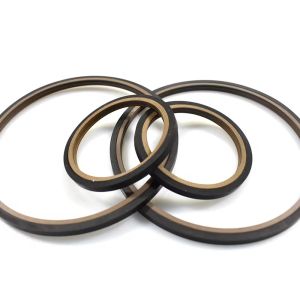
Brown Center Joint Seal SPN/SPNT 60*4.8 Hydraulic Seal Ring For Excavator
Installtion steps
1. Preparation
- Ensure the work area is clean to prevent dust and impurities from
entering the oil seal.
- Prepare the required tools and materials, such as cylinder
installation tools, lubricating oil, etc.
2. Remove the old oil seal
- Turn off the device and make sure it is in a safe condition.
- Use appropriate tools to remove the old oil seal. Be careful not
to damage surrounding components.
3. Clean the installation location
- Use a cloth and detergent to clean the installation location to
ensure there are no residual oils and impurities.
4. Check the new oil seal
- Check whether the new oil seal (SPN) is intact and ensure that
its size and model match the equipment requirements.
5. Lubricating oil seal
- Apply an appropriate amount of lubricant to the inner and outer
surfaces of the oil seal to facilitate installation and reduce
initial wear.
6. Install new oil seal
- Carefully place the new oil seal in its installation position,
making sure it is aligned.
7. Check the installation effect
- Make sure the oil seal is in place and not skewed or deformed.
- Check whether surrounding parts are normal and make sure they are
not loose or damaged.
8. Reassembly of Equipment
- Reassemble the device following the reverse steps of disassembly.
- Make sure all bolts and nuts are tightened in place
9. Test Equipment
- Start the equipment and perform tests to check whether the oil
seal is working properly and whether there is any oil leakage.
- Observe for a period of time to ensure that the oil seal can
operate normally under actual working conditions.
Product picture

performance
The oil seal in the oil separation has excellent sealing
performance. It can effectively prevent oil leakage in the
reciprocating oil seal.
Wear resistance
The oil seal in the oil separator is usually made of highly
wear-resistant materials, such as fluororubber/butadiene rubber
(viton/NBR) or polytetrafluoroethylene (PTFE). These materials have
good wear resistance and can be used for a long time in high
friction environments without being easily damaged.
High temperature resistance**
The oil seal in the oil separation system needs to work under
high-temperature oil cylinders, so its material usually has good
high-temperature resistance.
Chemical resistance
The oil seal in the oil separation system needs to be in contact
with various oils and chemicals, so its material must have good
chemical resistance. Viton and PTFE are particularly good at this,
being resistant to most oils and chemicals.
Elasticity and flexibility
The oil seal in the oil separation system needs to work in a
dynamic environment, so its material must have good elasticity and
flexibility to adapt to the movement and vibration of the
equipment. This helps maintain the seal and prevent oil leakage.

|
 Blue PU Rubber Seal Excavator ROI 60 Rotary Seal Ring
Customized Rotary Shaft Seals ROI 95 PU Rubber Seal Ring ODM
Brown PTFE Bronze Seal NBR POM Spn Seal Back Up Ring 105 X 6 Grs Seals
Center Joint Seal Rotaly Seal SPN 70 X 80 X 4.8MM Excavators Cylinder Seal
28MPa PU Center Joint Seal Excavator Spare Parts Seal Kit Excavator
PU Rubber Rotary Excavator Joint Seal ROI Oil Seal Hydraulic Seal Orange
ROI 100 Blue Joint Seal PU Rotary Stem Seal Low Friction
Centre Joint Seal PU ROI Green Color Excavator Seal Kit For Sealing
Blue PU Rubber Seal Excavator ROI 60 Rotary Seal Ring
Customized Rotary Shaft Seals ROI 95 PU Rubber Seal Ring ODM
Brown PTFE Bronze Seal NBR POM Spn Seal Back Up Ring 105 X 6 Grs Seals
Center Joint Seal Rotaly Seal SPN 70 X 80 X 4.8MM Excavators Cylinder Seal
28MPa PU Center Joint Seal Excavator Spare Parts Seal Kit Excavator
PU Rubber Rotary Excavator Joint Seal ROI Oil Seal Hydraulic Seal Orange
ROI 100 Blue Joint Seal PU Rotary Stem Seal Low Friction
Centre Joint Seal PU ROI Green Color Excavator Seal Kit For Sealing