Vacuum Casting Rapid Prototyping Of Small Production Runs For ABS
Polyurethanes
Vacuum Casting :
Polyurethane vacuum casting is a specialized method used to create
accurate replicas of master patterns. This involves using
affordable silicone molds and liquid casting resins. The resulting
copies exhibit similar quality to plastic injection-molded parts,
but they are much quicker and cost-effective to produce.
Industries involved:
Robotics, UAVS(unmanned aerial vehicles, medical equipment, plastic
enclosures, Eletrical products, phone cases, auto parts, Household
appliances, sporting equipment,etc.
Benefits Of Vacuum Casting
Vacuum casting offers efficient manufacturing of intricate shapes
with high precision, cost-effectiveness, and versatility:
- Easily create complex shapes with precision.
- Simultaneously produce multiple components for enhanced efficiency.
- Rapidly prototype using quality urethane for small batches.
- Diverse material properties with different polyurethanes.
- Economical manufacturing due to low polyurethane costs.
- Efficient silicone mold production compared to metal molds.
Urethane Casting Tolerance Guidelines:
| Maximum build dimensions | The size of the mold is limited by the dimensions of the vacuum
chamber (1,900 x 900 x 750 mm) and by the volume of the product
(maximum volume: 10 liters). |
| Standard accuracy | ±0.3% (with a lower limit of ±0.3 mm on dimensions smaller than 100
mm). |
| Minimum wall thickness | At least 0.75 mm to ensure the mold is filled properly; for best
results, a wall thickness of at least 1.5 mm is recommended. |
| Surface structure | High-quality surface finish comparable to injection molding. |
Size limitations for Urethane Casting:
Requirement
|
Specifications
|
Maximum part dimensions
|
1700 x 700 x 850 mm
|
Minimum wall thickness
|
0.65 mm (recommended wall thickness 1.5 mm)
|
Duplication quantities
|
10-20 copies (depend complexity of the mold and casting materials)
|
Vacuum Casting Process
Creating polyurethane vacuum cast parts involves three main steps:
master pattern creation,
mold fabrication, and part casting.

1. Master Pattern Creation:
Crafting patterns from your CAD designs is the initial step. These
3D solids are made through CNC machining or 3D plastic printing
like SLA/SLS. You can provide patterns or let us create them.
Patterns should endure up to 50°C heat.
2. Mold Fabrication:
Liquid silicone forms the casting molds. It's poured around the
master pattern within a casting box, cured in an oven for 15 hours.
Afterward, the mold is opened, and the master pattern is removed,
yielding a negative cavity mirroring the original. Our silicone molds typically yield around 25 copies of the master
pattern.
Vacuum Casting Materials:
Acrylic-Like |
Acrylic-Like is a rigid and uncomplicated polyurethane plastic
designed to mimic acrylic (PMMA). It's used to craft components
that need some level of translucency, such as light panels, safety
screens, and automotive taillights.
|
ABS-Like |
ABS-Like is a versatile polyurethane plastic that imitates ABS
thermoplastic. Widely used, it's a reliable option suitable for
various parts.
|
Opaque Elastomer |
Opaque Elastomer is a polyurethane plastic designed to replicate
diverse rubber-like substances such as TPE, TPU, and silicone
rubber.
|
Waterclear Elastomer |
Waterclear Elastomer is a urethane casting substance that mimics a
variety of rubber-like materials like TPE, TPU, and silicone
rubber. It's particularly suitable for wearables, gaskets, and
overmolds, and is offered in a range of hardness levels from Shore
30A to Shore 80A, with increments of 10A.
|
Vacuum Casting Finishing
Glossy paint | High-gloss paint is renowned for its exceptional shine and ability
to reflect light, creating a surface finish that imparts a nearly
mirror-like appearance to objects. |
Transparent | This method allows for achieving exceptional transparency and
purity in high-purity plastic materials used for components,
combined with a polishing process. |
Soft-touch | This technique involves the application of a soft-touch coating
surface finish to elements like rubberized buttons and coatings.
Primarily utilized to enhance the ergonomic comfort of the product. |
Painting
| A simple process that applies a color to your parts, we have a
large range of colors and styles. |
Laser engraving
| Utilize laser beams to modify object surface characteristics and
personalize components according to your preferences. |
Screen printing | Screen printing serves as a versatile printing method for ink
transfer onto surfaces. Operators skillfully employ tools such as
paper and a squeegee to execute this process. Additionally,
stencils can be utilized strategically to block ink transfer to
specific areas. This technique is particularly valuable for
creating intricate designs with multiple colors. |
Tampography | Pad Printing is an innovative technique for imprinting a 2-D image
onto a 3-D object. This method involves utilizing an etched plate,
often referred to as a cliche, in conjunction with a specialized
pad to seamlessly transfer the desired image. |
Why Choose JYH- precision for Vacuum Casting Rapid Prototyping Services?
In the realm of vacuum casting, a multitude of manufacturers are
available for selection. Opting for the correct one holds
paramount importance of achieving your anticipated outcomes.
- Outstanding Quality and Rapid Performance
At JYH Precision, we believe that quality and speed should go hand
in hand. Our approach combines extensive industry expertise with
cutting-edge tools and technologies, enabling us to provide
top-notch vacuum casting services within tight timelines (usually 5
to 7 days). | - Enhancing Your Product with Finishing Services
Vacuum casting is just a part of our capabilities. We provide an
array of supplementary finishing services that contribute to
bringing your product to its full potential. These services
encompass machining, media blasting, printing, painting, and
beyond. |
- Smart Quotes Tailored to Your Every Project
We recognize that your requirements are distinct, and unnecessary
expenses are undesirable. Hence, we refrain from imposing minimum
order volumes or dollar values for our vacuum casting services. We
ensure swift and precise quotes within 1 hour or less for almost
all projects. | - Supporting Design for Manufacturing and Remote Flexibility
Vacuum casting is frequently utilized for prototyping; we
understand that many of the products. To facilitate their
refinement, we extend a comprehensive design for manufacturing
assistance to our clients.
|
FAQ:
- Why would you choose vacuum casting over 3D Printing?
Choosing vacuum casting over 3D printing hinges primarily on
material quality and performance.
Vacuum casting offers superior materials that closely replicate
those found in commercial products.
If material performance and product aesthetics are paramount, opt
for vacuum casting.
- What industries are using vacuum casting?
As vacuum casting can be used for low volume production as well as
mass production, it is applied by various industries such as
consumer products, food and beverage, electronics, and etc.
- Can I make production-quality parts using vacuum casting?
Vacuum casting is best for making visually impressive prototypes,
but it can also be used for non-mechanical end-use parts.
Shipping way:
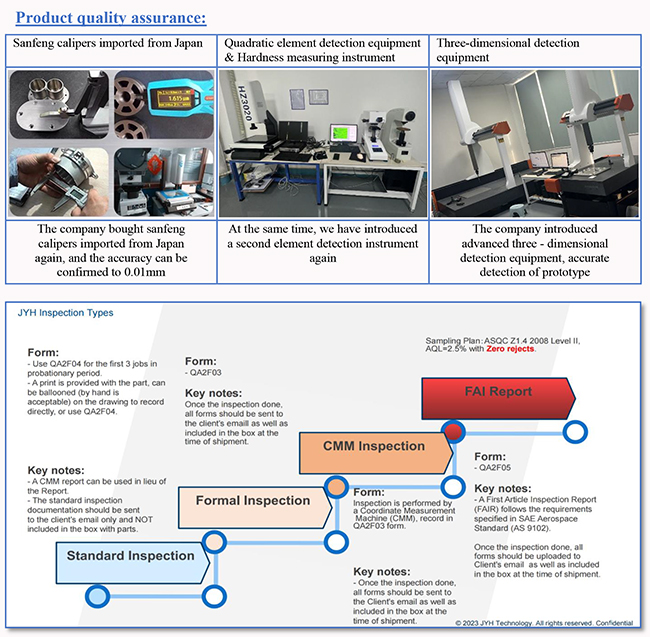
QC checking before ship the product:
Payment term:

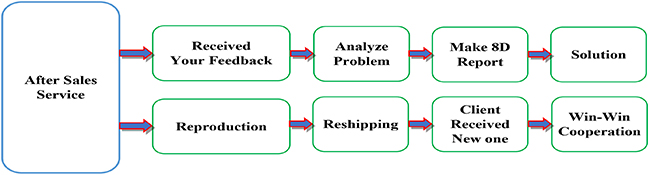
After service:
Package method:
Vacuum Casting Plastic Parts and Rapid Prototyping of Small
Production Runs, JYH is your best injection mold supplier!
Injection Moulding is highly repeatable.


